

10 Worst Home Pests in Maryland

From coastal towns to mountain regions, Maryland homes face a wide range of pests. Some are just a nuisance, others can bite, sting, or cause costly damage, and a few are downright terrifying.
Discover which pests are the biggest threats to Maryland homes, and what steps you can take to keep them out.
Which Pests are Most Common in Maryland?
It’s not always easy to track regional pest populations and trends. Homeowners manage pests in a wide variety of ways, and exterminators only find out about pest problems when a homeowner calls. However, Google search data can provide helpful insight into which insects and animal invaders are on people’s minds. Through Google Trends, we can identify the top Maryland pests. After crunching the numbers, we found that spiders and mice are Maryland’s top concern.

10 Worst Home Pests in Maryland
| Rank | Pest | Google Search Volume As a Percentage of the Top 10 |
|---|---|---|
| 1 | Spiders | 19% |
| 2 | Mice/Rats | 19% |
| 3 | Snakes | 17% |
| 4 | Deer | 14% |
| 5 | Bees/Wasps | 12% |
| 6 | Ticks | 5% |
| 7 | Flies | 4% |
| 8 | Mosquitoes | 4% |
| 9 | Ants | 3% |
| 10 | Squirrels | 3% |
Maryland Pest Problems
The worst pests in Maryland, spiders and mice, can be terrifying to discover in your home. There’s a good reason they inspire fear, because these invaders can be dangerous.
Maryland has 32 different species of spiders, including the poisonous Black Widow and Brown Recluse. Spiders are a common crawl space pest, and many species like the damp, dark environment of the ground floor before moving to the upper levels of your home.
Rodents are a problem throughout the state, and their ability to carry diseases can make them dangerous to your health. In recent years, there has been some feuding between the cities of Baltimore and Washington, D.C., as to which city has a worse rodent problem. According to the 2020 data from Orkin, D.C. is worse, ranking as the fourth most rat-infested city in the country, compared to Baltimore’s ranking of eighth. However, with both cities ranking in the top 10, it’s clear that rodents are a problem throughout the area.
In Baltimore, finding rodents at home has been more of a problem during the pandemic. As potential food sources for pests shifted from restaurants to backyard barbecues, rodent populations have moved from commercial districts to people’s homes.
Will Cicadas Become the Worst Maryland Pest in 2021?
The pest population in Maryland is about to change dramatically. When the ground eight inches below the surface reaches 64 degrees (likely in early May), billions of cicadas will emerge from the soil.
“Maryland is at the epicenter, and this is one of the largest [cicada] broods that occurs at one time in 15 different states across the eastern United States,” explains a UMD entomology graduate student.
After this 17-year Brood X emerges, we expect that cicadas will shoot to the top of the list of the worst home pests in Maryland.
Cicadas generally won’t cause much damage to your home or landscape, although some young trees could be at risk. They won’t sting or bite, but they’re very noisy, using sound to communicate and attract a mate. A high density of cicadas can get as loud as 100 decibels, and the sound can last for the eight weeks that the insects are expected to be above ground.
A high-density area of cicadas can have as many as one million insects per acre. Maryland residents should prepare for a lot of bugs and a lot of cast skins after they molt.
What About Termites in Maryland?
Maryland has a high risk for termites, and Baltimore ranked as the 15th worst city in the country for termites, according to Orkin.
A key problem for homeowners in the state is that termites rarely infest dry wood. Water problems are usually the precursor to termite problems, and Maryland has a massive shoreline, heavy rains, and a prevalence of flooding.
Termites can cause significant damage to homes. A colony can eat about a pound of wood per day and go undetected for years. When the termite problem is finally found, the wooden beams of your house could be so perforated inside that they look like corrugated cardboard.
For example, Maryland residents near Baltimore discovered termite damage after they bought what they thought was a perfect starter home. During the sale, they learned that the basement floods during heavy rain. Later, they discovered this water likely brought about the termite infestation. The damage is so bad that the new owners expect repairs to cost about half of what they spent to buy the home.
What Structural Solutions Can Help You Reduce Pests?
Pest control and extermination are important first steps to managing pest problems. However, you’ll never get a pest problem under control if you don’t deal with the structural problems of how they got in or why they want to be there. Here’s how the structure of your home plays a role in pest control, and what you can do to make it more difficult for pests to get inside your house:
1. Seal the cracks and gaps where pests are entering. One of the best things you can do is to prevent pests from getting into your home in the first place. It’s especially important to look along the base of your home where burrowing pests can use foundation cracks as an easy entryway.
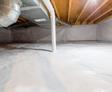
2. Make your home less inviting to pests. Many pests are attracted to damp conditions around your home, or a damp basement or crawl space. Basement waterproofing can make your home less attractive to pest invaders and more enjoyable for you. You can add interior drainage, sump pumps, and dehumidifiers. If your home has a crawl space, a thick, durable vapor barrier can make it hard for pests to get inside your home.
3. Integrate termite protection into your structure. Many new homes use materials that have integrated termite protection, and homeowners who are making repairs can get the same benefit. For example, adding insulation panels to the lower level of your home creates a clean, dry area, and because it’s treated with termiticide, your home won’t have the same risks as it would with soft, wet insulation in the lower level of your home.
How can you manage water problems and make your home less attractive to pests? Find out with a free inspection from JES Foundation Repair.
Crawl Space Repair FAQ
The duration of the project varies based on the crawl space size, the extent of existing damage, and the specific solutions implemented. Most encapsulation projects take between one and three days to complete, including moisture control, insulation, and sealing. JES Foundation Repair teams work efficiently to ensure your crawl space is fully protected on schedule. Contact us for more information and to schedule a free inspection.
Sudden increases in utility costs without changes in usage, cold floors, high indoor humidity, and musty odors may signal crawl space problems. JES Foundation Repair determines the root of the issue and proposes customized repair solutions during a free inspection.
Absolutely. Addressing crawl space moisture protects your home’s structural integrity and ensures a healthier living environment, providing long-term benefits. Delaying action can lead to more severe issues like structural damage and health hazards. Reach out to JES Foundation Repair for a detailed, free inspection and quote.
Related Resources
Publish Date:
Last Modified Date:
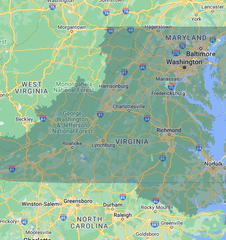
Our Locations
8361 Town Center Ct
Nottingham, MD 21236
311 Central Rd.
Suite 2-02
Fredericksburg, VA 22401
2569 Quality Ct
Virginia Beach, VA 23454
7940 Gainsford Ct.
Bristow, VA 20136
309 Quarles Rd
Ashland, VA 23005
2033 Cook Dr.
Salem, VA 24153
456 Old Courthouse Rd
Appomattox, VA 24522
45 W Boscawen St,
Winchester, VA 22601