

Why Do I Have Leaking Basement Walls?
Get Your Free EstimateThere are many reasons your basement walls may be leaking. However, these are the most common reasons someone will discover their basement walls are leaking.
Water in the Soil Surrounding Your Foundation
If you live in an area where the water table is above the very bottom of your basement, you’re going to deal with hydrostatic pressure. Hydrostatic pressure is scientifically defined as “the weight of water when it is at rest,” which means the amount of force water exerts just sitting in a space. Even though it’s not rushing like a stream, the water in the soil around your foundation has a lot of weight, and that means it has a lot of power.
The water in the soil surrounding your foundation can be very heavy. That water then presses in on your basement walls, which can lead to serious basement bowing and basement cracks. Because water wants to fill up any space it’s in, it will invariably start to move through those cracks, causing a leaking basement wall.
Abnormal Flooding
Did your area recently get a lot of water? Have you been seeing flood warnings on the news? If there’s a lot of water outside, it’s natural to assume there would be a lot of water trying to get into your basement. When there’s a lot of water running through the area around you, you’re going to deal with excess hydrostatic pressure both above and below ground.
Below-ground hydrostatic pressure can be very damaging to your basement walls. Your basement is used to a certain amount of pressure, and suddenly increasing that amount of pressure can be extremely detrimental to the basement walls. Additionally, if you have above-ground windows, the extra hydrostatic pressure can push on the windows and the window lining.
Poured Concrete Walls with Cracks
Poured concrete walls tend to be more prone to issues than other types of walls. The hydrostatic pressure on the outside of your poured concrete basement walls is very extreme for any type of wall, but unfortunately, poured concrete walls can have more serious issues more easily than many other types of walls.
If you have poured concrete walls or a concrete foundation, you may end up with cracks in them from the hydrostatic pressure. As already explained, basement wall cracks make it very easy for water to pass into the basement from the outside. Any time you notice basement wall cracks, even if there isn’t any water flowing through, you should consult with a foundation repair specialist.
Underground Water Reserves
Does your home sit on or near an underground water source? This can be very damaging because it often makes the soil around it much more moist than it would be in an area without an underground water source. Moist soil is not only prone to expanding, but it’s also much heavier than dry soil, which means you’re likely to have issues with bowing basement walls and cracks.
Unfortunately, many people don’t know whether their homes sit near an underground water source. It can be very difficult to find out on your own. That’s why you should instead consult with an expert, who can give you information on the problems you’re facing regarding your basement walls and any leaking you’re experiencing.
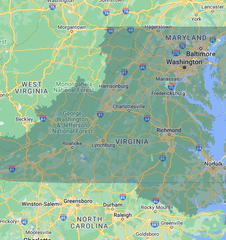
Our Locations
8361 Town Center Ct
Nottingham, MD 21236
311 Central Rd.
Suite 2-02
Fredericksburg, VA 22401
2569 Quality Ct
Virginia Beach, VA 23454
7940 Gainsford Ct.
Bristow, VA 20136
309 Quarles Rd
Ashland, VA 23005
2033 Cook Dr.
Salem, VA 24153
456 Old Courthouse Rd
Appomattox, VA 24522
45 W Boscawen St,
Winchester, VA 22601