

North Carolina
Get Your Free EstimateNorth Carolina revised its building code in 2018, leading to some brand-new regulations regarding encapsulated crawl spaces, including cleared-up wording for exceptions to the venting requirement. The building code still treats a vented crawl space as the default, but it’s coming to realize that unvented crawl spaces are very much preferable. Now you can have an unvented crawl space as long as you meet the following requirements:
- Air-sealed crawl space perimeter wall
- Tight-fitting access panels or doors that have a latch mechanism and insulation
- A certain amount of coverage with the vapor barrier
- A method of crawl space moisture control that may include a dehumidifier, supply air, house air, exhaust fan, or conditioned space
Additionally, all crawl spaces, both vented and unvented, have the following requirements:
- Complete separation of the crawl space with adjoining basements, porches, and garages
- A termite inspection gap of 3-4 inches
- A vapor barrier of at least 6-mil covering all exposed earth
This can seem like a confusing array of requirements, but a crawl space expert can walk you through it. Remember that these are the minimum; for example, although the vapor barrier must be at least 6-mil, there’s nothing saying that it can’t be more robust, like JES’ preferred 20-mil CrawlSeal™ vapor barrier.
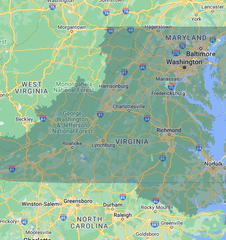
Our Locations
8361 Town Center Ct
Nottingham, MD 21236
311 Central Rd.
Suite 2-02
Fredericksburg, VA 22401
2569 Quality Ct
Virginia Beach, VA 23454
7940 Gainsford Ct.
Bristow, VA 20136
309 Quarles Rd
Ashland, VA 23005
2033 Cook Dr.
Salem, VA 24153
456 Old Courthouse Rd
Appomattox, VA 24522
45 W Boscawen St,
Winchester, VA 22601