Skip to Main Content

Virginia’s Ultimate Guide to Crawl Space Dehumidifiers 

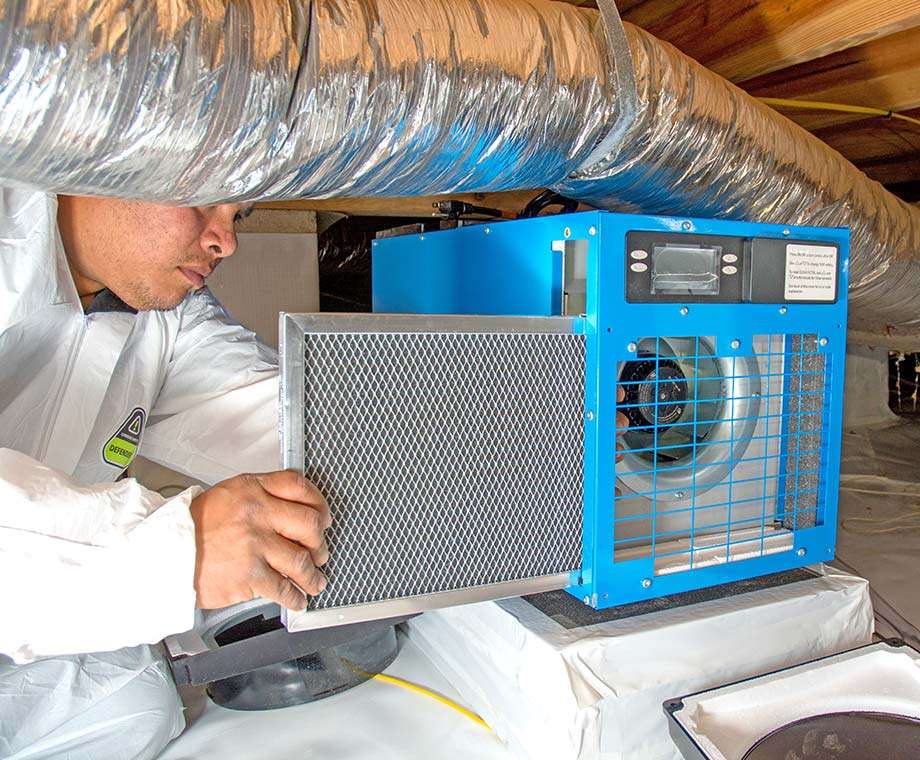
crew member installing a dehumidifier in a crawl space

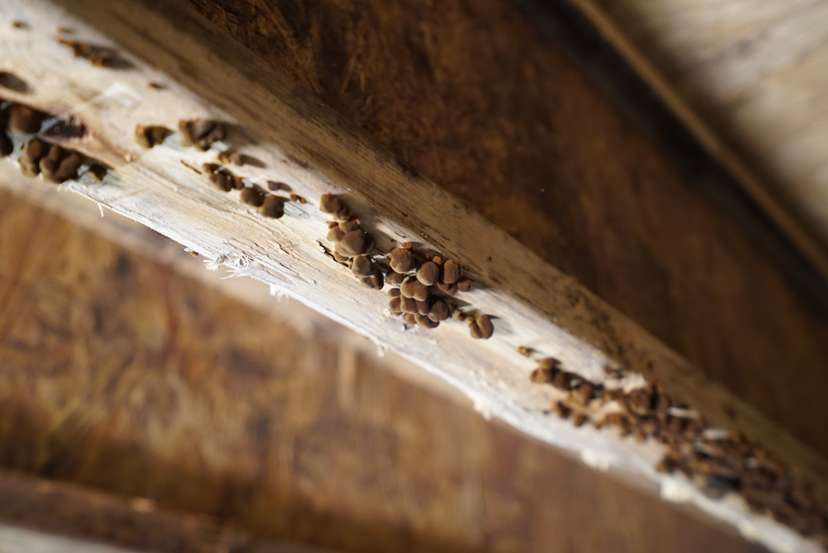
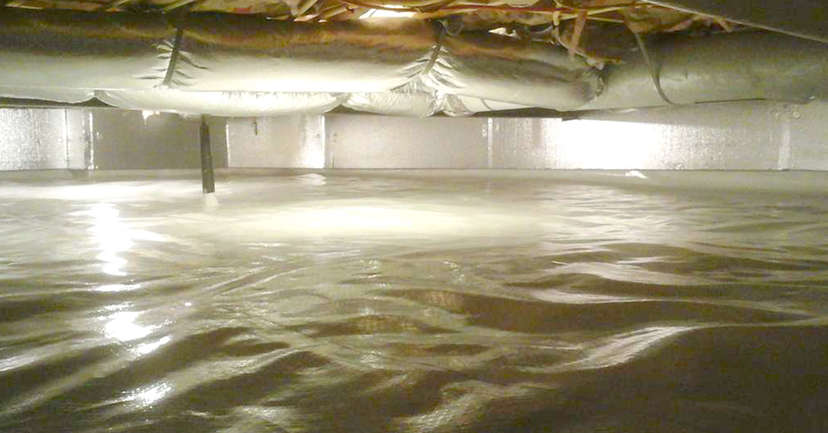
Did you know that excess humidity in your crawl space leads to sagging floors, wood rot, and mold growth. Installing a dehumidifier helps control moisture levels, preventing damage and improving your home’s overall air quality.

When paired with a full encapsulation system, it becomes an essential component of effective crawl space moisture management.

This page will explain how a dehumidifier works and why it’s a smart investment for long-term crawl space protection.

5 Benefits of a Crawl Space Dehumidifier

Dehumidifiers balance the humidity inside your crawl space, thereby reducing moisture throughout your home. This means you’ll experience several benefits. 

1. Improved Air Quality

Getting rid of mold spores that cause allergy flare-ups and upper raspatory infections is a major benefit. Industry-grade crawl space dehumidifiers not only reduce moisture in the air but also filter harmful chemicals out of it. The dehumidifiers used at JES filter more than 280 cubic feet of air per minute.

2. Lowers Humidity

The main goal of a dehumidifier is to reduce the amount of moisture in the air. In an area like an unprotected crawl space, humidity is generally high, so choosing the right unit to do this is essential. JES humidifiers remove 13 gallons of water per day. Water that can no longer cause mold, mildew, musty smells, and wood rot.  

3. Reduces Energy Bills

It’s not uncommon for homeowners to worry about increased energy bills when installing a dehumidifier. However, the opposite is true if you choose to install the right unit. An energy-efficient dehumidifier can save you up to 23% in total savings.

4. Preserves Curb Appeal

The charm of your home is preserved by installing a dehumidifier. Items like wood trim that may have been damaged by warping, rotting, or pest damage are now protected. As a result, the entire home looks better, which helps if you try to sell in the future.

5. More Efficient Air Conditioning

Since a dehumidifier removes moisture from the air and lowers the humidity in your home, your HVAC unit won’t have to work as hard. Less humid air makes warmer temperatures feel cooler, allowing your AC unit to run less.

What to Look For in a Dehumidifier

Just like any home appliance, dehumidifiers have various features. Energy efficiency is, of course, a necessary feature. Equally important are features that make it easy to control humidity and maintain your dehumidifier. 

  • ENERGY STAR®️ certified – When shopping, look out for the yellow Energy Guide label, which indicates whether the unit is Energy Star certified.
  • Humidistat – Look for units with a humidistat, which measures relative humidity and digital controls that let you set your ideal home humidity levels.
  • Drainage features – conventional dehumidifiers hold condensed water in tanks or buckets. Get a model with a detachable tank or one that empties water into a drain through a hose.
  • A timerA timer lets you control when the dehumidifier turns on and runs and off. Thus, you won’t have to turn the unit on manually.
  • Automatic restart – The auto-restart function enables the dehumidifier to turn on in the event of a power outage.
  • Detachable air filters – Because of dust build-up, you’ll want a dehumidifier that comes with easy-to-remove filters so you can clean them.
  • Antimicrobial disinfectantA good dehumidifier should not only remove dust particles from the air but also purify it.
  • Frost sensors – During cold winter months, frost can build up on the condenser coils, reducing the efficiency of your unit. A frost sensor prompts the dehumidifier to shut off and defrost.

You may also want to consider the air discharge location and whether the dehumidifier can connect to a home hub to control your device. Be sure to also check the operating temperature range. A unit that fits

Why Use an Energy-Efficient Dehumidifier?

While you have the option of buying any dehumidifier, we strongly recommend an Energy Star certified unit for the following reasons:

  • Prevents awful smells – An Energy Star certified unit also reduces smells by controlling the spread of dust and mold spores in the air.
  • Reduced humidity – Of course, a dehumidifier is designed to draw out moisture and create a comfortable home environment. 
  • Lower energy usage – An energy-efficient unit helps save energy consumption. In a year, you will save energy that can power an Energy Star certified refrigerator for four months! 
  • More efficient HVAC unit – Since the dehumidifier removes excess moisture, it enables your HVAC to work more efficiently, reducing energy usage.
  • Enhanced indoor air quality – With dust-laden moisture and mold particles out of the atmosphere, you and your loved ones can breathe easy and experience fewer allergies.

What Are the Components of a Dehumidifier?

Like all mechanical appliances, a dehumidifier is made up of many parts. Below we’ll review some of the more important features to help you choose the right unit.  

Energy Guide Label

While not technically a “part,” we argue that it’s one of the most important features for any dehumidifier. When shopping for a dehumidifier, look for the bright yellow label. It’s usually found somewhere on the front of the product. This helps you easily identify products that minimize energy use without sacrificing performance.  

Humidistat

A humidistat measures relative humidity levels in the home. Relative humidity is the amount of water vapor present in the air compared to how much it can hold at a specific temperature. It’s shown as a percentage. You should have a gauge on the dehumidifier and digital controls that allow you to set the perfect humidity levels for your home. 

Drainage Feature

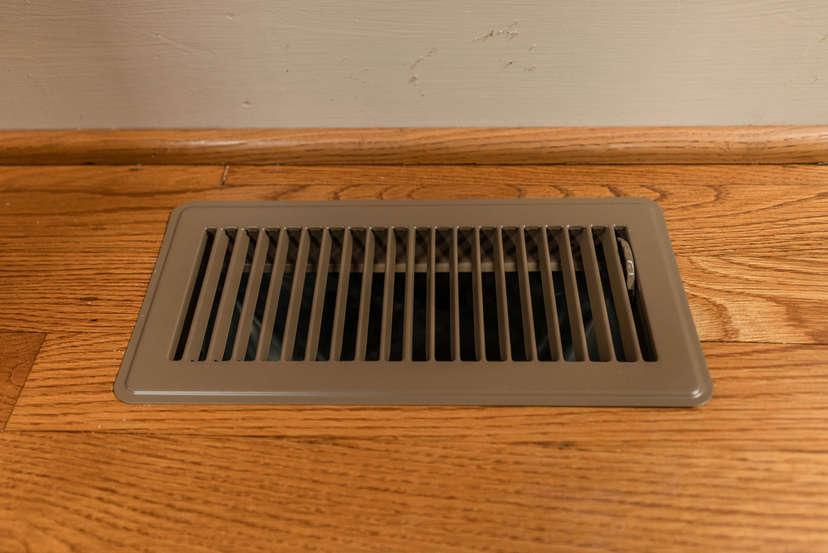
Older conventional dehumidifiers held water in a tank that needed to be emptied. When installing a dehumidifier inside a crawl space, this method is basically undoable. Your dehumidifier should empty through a hose into a drain where it is pumped out and away from the house.  

Filters

Even the best encapsulated crawl spaces can get dusty since air is being circulated throughout your home. Look for a high-quality filter that is easy to replace. JES offers a maintenance service plan to take the guesswork out of dehumidifier maintenance. Technicians will inspect, clean, and replace filters so you’re always running at peak capacity.  

How to Care for Your Dehumidifier

Dehumidifiers are among the simplest of waterproofing measures you can install around your home. That said, they can also begin to underperform if not properly cared for. With that in mind, what does basic dehumidifier maintenance look like, and when is it time to call in the professionals?

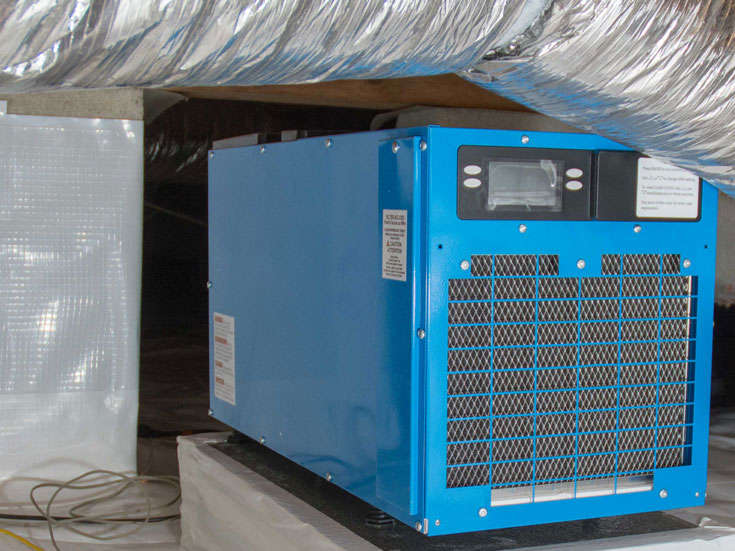
crawl space dehumidifier
  • Careful Placement: The placement of your dehumidifier impacts its performance. Ideally, it should be within six inches of the spot in your home that leaks most frequently. Try to keep boxes or other obstacles out of the way.
  • Regular Emptying: If you have a conventional dehumidifier, you’ll want to try and empty your bucket on a daily basis. That’s why we recommend installing a dehumidifier that has the ability to self-drain. That way, you don’t have to worry about emptying anything.
  • Routine Cleaning: At least once a month, you’ll want to empty and clean the dehumidifier’s water basket with soap, water, or a gentle chemical cleaner. You’ll also want to vacuum the air intake and grills to keep dust from building up and impeding airflow.
  • Inspect Filters: Make sure to replace your dehumidifier’s filter at least once a year. These filters pull dust particles and other small nuisances out of your air along with moisture. If left unattended, the filter’s overall performance will suffer.
  • Cycle with Care: When your dehumidifier stops working, don’t rapidly turn it on and off again to get it up and running again. When you don’t give your dehumidifier time to breathe, it can short-cycle and trip your circuit breaker. Wait at least 15 minutes before starting it up again.

Got Dehumidifier Issues? Call JES!

Two men kneel by a brick wall, examining a crawl space vent.

When in doubt, you can talk over the state of your dehumidifier with the leading professional basement and foundation repair professionals in your area. An expert from JES will come to your home and inspect not only your dehumidifier but the overall condition of your foundation and basement. In little to no time at all, you’ll know if the problem you’re experiencing is with your dehumidifier or with your home in general.

Your dehumidifier does a lot of work around your home. Make sure you’re taking care of it while it looks out for you. Contact us today to schedule a free in-home inspection.

Crawl Space Dehumidifier FAQs

While there isn’t a specific location necessary for the dehumidifier, it’s typically installed near the sump pump to help with drainage.  

Often the dehumidifier is installed in an area where it is visible from the opening of the crawl space. Making it easy to ensure it is functioning efficiently.  

While you certainly can install a regular dehumidifier in your crawl space, the results will be less than successful, and it will involve a lot of work on your part to keep it in good condition.  

A regular, big-box store dehumidifier is not designed for use in such a large humid area. This means it has to run constantly to keep up, sending your energy bills through the roof. 

Dehumidifiers designed for use in a basement also commonly need to be emptied. While not impossible, climbing in and out of your crawl space to empty the dehumidifier, often daily, is a huge hassle.  

Instead, choose a specifically designed crawl space dehumidifier to work in hard-to-reach areas with a large volume capacity.  

A dehumidifier is mechanical, so estimating how long it will last is tricky. However, look for a dehumidifier with a manufacturer’s warranty of at least 5 years.  

A high-capacity unit able to remove a large volume of water per cycle is best. Fewer cycles result in a longer lasting product.  

Related Resources

alice

alice

Publish Date:

Last Modified Date:

JES Foundation Repair service area map of the Mid-Atlantic region.

Our Locations

Baltimore

8361 Town Center Ct
Nottingham, MD 21236

Fredericksburg

311 Central Rd.
Suite 2-02
Fredericksburg, VA 22401

Hampton Roads & NE NC

2569 Quality Ct
Virginia Beach, VA 23454

Northern VA & DC

7940 Gainsford Ct.
Bristow, VA 20136

Richmond

309 Quarles Rd
Ashland, VA 23005

Southwest Virginia / Roanoke

2033 Cook Dr.
Salem, VA 24153

Western Virginia

456 Old Courthouse Rd
Appomattox, VA 24522

Winchester

45 W Boscawen St,
Winchester, VA 22601