

Why Is My Concrete Flaking Off?
If your concrete is flaking off, it’s a sign that something is wrong with the concrete. Concrete doesn’t stay smooth forever, and some flaking is to be expected after a few years. However, you should inform yourself on the kind of flaking it is so that you can get a better understanding of what your concrete is going through and how it could potentially lead to settling.
There are two types of surface deterioration concrete structures go through: pitting and flaking. They are caused by different things though are very similar in terms of appearance. Pay close attention when inspecting your concrete, and you’ll be able to differentiate between the two.
- Concrete Pitting
Concrete pitting is caused by problems with the way the concrete was produced or poured. It’s a problem that only shows up after the concrete has finished curing. Concrete pitting means there’s a problem with the structural integrity of the concrete itself. It indicates that the concrete is weak and deteriorates incredibly easily, which means that you have to be careful if you see signs of pitting on a settled slab.
Concrete pitting is defined by small craters that form on the concrete structure. Although the craters are only visible on the surface, if you were to break the slab open, you would see that the craters run deep since the entire concrete is deteriorating. The craters can either appear sporadically across the concrete or, they can clump up and form one big crater that makes it look as if a piece of the concrete has broken off.
- Concrete Flaking
Concrete flaking is caused by an external force eroding the surface of the concrete. Freeze-thaw damage is a common cause of flaking since the ice creates micro-tears across the surface of the slab. If the micro-tears become too much, the piece will flake off. Concrete flaking can still happen on slabs that are strong, so it does not indicate that there was a problem with its production. You can tell it’s flaking and not pitting when a big chunk flakes off and you don’t see any craters, indicating that the damage was only surface-level.
Just because flaking can occur on slabs that are strong does not mean it doesn’t affect settling. By deteriorating the surface of the slab, it allows water to seep through to the soil a lot easier, accelerating settling. Plus, a flaking slab does not stay strong for long. As the surface breaks apart, the slab loses its soundness and is likely to break once it begins settling.
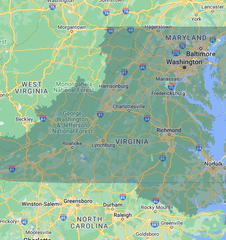
Our Locations
8361 Town Center Ct
Nottingham, MD 21236
311 Central Rd.
Suite 2-02
Fredericksburg, VA 22401
2569 Quality Ct
Virginia Beach, VA 23454
7940 Gainsford Ct.
Bristow, VA 20136
309 Quarles Rd
Ashland, VA 23005
2033 Cook Dr.
Salem, VA 24153
456 Old Courthouse Rd
Appomattox, VA 24522
45 W Boscawen St,
Winchester, VA 22601