

How Does Hydrostatic Pressure Affect A Home?
Hydrostatic pressure is, above and beyond all else, a natural force that all homes have to deal with on a pretty much consistent basis. You see, hydrostatic pressure is simply the weight of the soil and the water that it contains at any given point. All properties are designed and built to withstand a certain level of hydrostatic pressure. Problems only really arise when the level of hydrostatic pressure goes beyond a property’s threshold.
When this happens, there are likely to be a number of repercussions for any home that is being affected. For example, homes that have unsealed foundation walls and a non-waterproofed crawl space or basement are likely to see seepage when the level of hydrostatic pressure around your property starts to get too high. This will, of course, cause a rise in humidity and dampness, and increase the risk of issues like mold formation and wood rot. More serious, however, is the likelihood of structural damage to your home.
One of the main reasons that basement or foundation walls can start to crack, lean, or buckle and bow when faced with strong hydrostatic pressure is because of how it applies pressure. Hydrostatic pressure is applied laterally, and this is something that concrete has real trouble dealing with. Concrete has a huge compressive strength, of course, but next to no tensile strength. As such, any significant level of hydrostatic pressure can cause serious damage very quickly and make repairs complex and very costly.
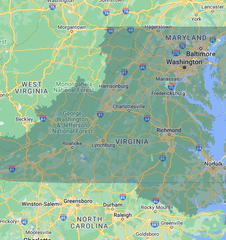
Our Locations
8361 Town Center Ct
Nottingham, MD 21236
311 Central Rd.
Suite 2-02
Fredericksburg, VA 22401
2569 Quality Ct
Virginia Beach, VA 23454
7940 Gainsford Ct.
Bristow, VA 20136
309 Quarles Rd
Ashland, VA 23005
2033 Cook Dr.
Salem, VA 24153
456 Old Courthouse Rd
Appomattox, VA 24522
45 W Boscawen St,
Winchester, VA 22601