

How are Foundation Piers Installed?
Foundation piers are some of the most commonly deployed solutions for foundation subsidence, settlement, and movement. They come in two main forms, helical and push, as well as a smaller form called slab piers. Each of these forms of pier has their own set of strengths and limitations, but they utilize the same basic principles and have similar installation processes and timeframes. Knowing that form is best for your particular situation can be hard, of course, which is why it is best to contact a professional. Broadly speaking, however, slab piers are best for slab foundations, resistance piers are most suitable for homes that are heavy and have intact footings, and helical piers are most suitable for homes that have experienced significant fragmentation.
Whichever form of foundation pier is best for your home, the installation process starts with mapping out the ideal placement points for each pier. Once the team helping you knows where the piers should be placed, they can excavate and expose the parts of your foundation that need to be worked on. At this point, holes will be drilled so that the piers can be driven into the earth under your property. For push piers this is done hydraulically, whereas helical piers are essentially screwed into the ground.
Once the piers are in place, they will be connected to your property’s foundation footing, thereby transferring the weight of your home from the unstable soil beneath its foundation to stable, load-bearing strata beneath the frost line. Once the weight of your home has been transferred successfully, the drill sites and excavated areas will be restored and covered up to ensure a seamless finish.
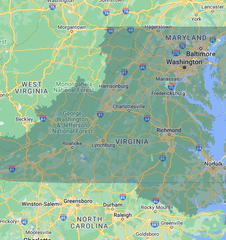
Our Locations
8361 Town Center Ct
Nottingham, MD 21236
311 Central Rd.
Suite 2-02
Fredericksburg, VA 22401
2569 Quality Ct
Virginia Beach, VA 23454
7940 Gainsford Ct.
Bristow, VA 20136
309 Quarles Rd
Ashland, VA 23005
2033 Cook Dr.
Salem, VA 24153
456 Old Courthouse Rd
Appomattox, VA 24522
45 W Boscawen St,
Winchester, VA 22601