

5 Popular Types of Sump Pump Systems
Sump pumps are crucial in keeping water out of the basement, especially during wet seasons. They also come in handy in protecting this below-grade area from occasional leaks and condensation that threaten to ruin your carpets, valuables, and keepsakes.
Many types of sump pumps are available that suit various purposes and spaces. With this range of choices, how do you know which one to purchase and if it will adequately protect your home?
In this article, we explore the different sump systems, what you can expect when using them, and how our team at JES Foundation Repair can help.
Commonly Used Sump Pump Systems
There are many different kinds of sump pumps to choose from, but here are the five most popular types:
1. Submersible Sump Pump

This type goes right into the sump pit and operates underwater. It’s enclosed in a watertight casing and has a sensor that detects when water rises to a critical level in the sump pit. An impeller ejects excess water from the sump basin via an attached drainage pipe. Water is then directed out of your home into a drainage area.
One distinct advantage of submersible pumps over non-submersible types is that they use direct pressure via a pipe, which is a more effective method than suction. This enables them to move water over a great distance.
Also, this type doesn’t need to be primed for operations to start working. This means the pump can start operating the moment it’s installed. Their motors are safe from burnout because they don’t need to be primed. Submersible pumps are also able to move vast amounts of water out.
The submersible might be the right type for you if you want a sump pump design that operates quietly and offers excellent protection against flooding. Be sure to get a battery backup so you won’t experience downtime in stormy weather.
2. Pedestal Sump Pump
Mounted above the sump basin, the pedestal sump sits above the basement’s water line. It rests on a pipe that keeps it above the required water level and has a water sensor that determines the amount of water entering the sump basin. When the water reaches a certain height, the sump’s motor kicks in and removes the excess water.
One of the advantages of installing a pedestal pump is that it can move out huge volumes of water effortlessly. As the sump pit fills with water, the pump’s float activates the motor and starts removing the water.
The pedestal sump pump benefits areas that receive massive rainfalls or experience significant snowfall. This also includes areas that are prone to flooding or water damage.
While a pedestal sump pump is economical, it’s likely to malfunction if it stays for long periods without being checked. Plus, its open nature makes it susceptible to damage from debris or other objects falling into the pit, and water can quickly evaporate back into the air, leading to condensation and elevated humidity or even flooding the basement. Regular inspections are essential as they ensure your pump performs appropriately and won’t suffer significant damage. With a little effort, you can keep your sump pump in top shape.
3. Water-powered Sump Pumps
This type doesn’t require electric power to function, a major advantage during heavy storms. It’s powered by your house’s water supply. One gallon of water is able to move out two gallons of water from the sump pit.
When water levels in the sump basin rise above the preset level, the float rises too and opens a valve that supplies water via a base pump ejector. Water flow creates a suction that sucks water from the pit and discharges it outside.
Because the main power source is water pressure, there’s no energy or water waste. Any water that’s used in the process goes back to the earth via a storm sewer. This type can also operate for several hours. If the electricity goes off for a couple of days or weeks, the pump will keep working as long as the water supply remains constant.
Water pressure has to be between 40-90 psi for the water-powered pump to operate smoothly. It’s advisable that the connection pipes be made from copper, as they’re resistant to rust.
4. Combination Sump Pumps
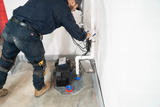
They’re a common type of centrifugal pump and have the salient features of a traditional sump pump but with an added layer of protection.
This type has a primary sump pump, a controller, a battery case, and a backup pump in case the primary one fails. It also has a battery that supplies power to the backup pump. When the primary pump fails, an alarm activates the backup to take over pumping duties. The backup system will keep operating until the primary sump pump is restored.
A float switch activates its motor, and the impeller starts spinning, forcing rising water to the sides of the pipe. What this does is create a lower-pressure area in the pipe’s center. Water from the sump basin rushes to fill the void and is ejected by the impelling via a drainage pipe to the outside.
5. Battery-powered Sump Pumps
The last type runs on batteries and works like the other sump pumps above. Water gets into a basin, and a float switch activates the pump. The good thing about the battery-powered pump is that it will keep operating even if the power goes out.
Its switch trips the moment electricity goes off in a storm and automatically starts powering the sump pump. Any loss of electricity won’t hamper the pump’s performance. This type is suitable for rural or wooden areas that are likely to experience power outages.
An essential part of the buying decision is how often electric power goes out and what types of storms you experience in your area. Regardless of the above considerations, a battery-powered sump pump does up your safety factor and protects your basement from water damage.
There are various battery-operated sump pumps, from low-capacity models to powerful ones. Experts will help you choose the right pump size depending on the sump pit size.
Get a Powerful Sump Pump
Sump pump systems can be complex, but the basement waterproofing experts at JES Foundation Repair take the guesswork out of choosing the right one.
We’ll evaluate your home and suggest the best fit for your water management needs. We’ll also recommend how to keep your basement dry with other systems like interior drainage, vapor barriers, and dehumidifiers.
We have been helping homeowners create and maintain safe, healthy, and dry living environments for 30 years. You can experience the excellence, too. Contact us today to learn more, schedule a free inspection, and obtain a no-obligation quote.
Sump Pump FAQs
We discourage DIY repairs on sump pump systems as they are intricate units with sensitive components. If you encounter issues with your sump pump, reach out to JES Foundation Repair for professional assistance and a free inspection.
Cleaning and maintaining your sump pump are essential to its continued operation. However, these are not DIY projects and should be left to trained professionals with the right tools and experience.
We advise incorporating a battery backup to your sump pump system, particularly if you’ve experienced significant flooding and power outages. Our backup options ensure uninterrupted operation of your sump pump during power losses. Contact JES Foundation Repair for a tailored recommendation.

Phillip Mazzotta
Related Resources



Publish Date:
Last Modified Date:

Our Locations
8361 Town Center Ct
Nottingham, MD 21236
311 Central Rd.
Suite 2-02
Fredericksburg, VA 22401
2569 Quality Ct
Virginia Beach, VA 23454
7940 Gainsford Ct.
Bristow, VA 20136
309 Quarles Rd
Ashland, VA 23005
2033 Cook Dr.
Salem, VA 24153
456 Old Courthouse Rd
Appomattox, VA 24522
45 W Boscawen St,
Winchester, VA 22601