


Concrete Footing Design
Concrete Footing - Info on building concrete footings including soil assessment, footing dimensions, repairs, spanning soft soil, water excavation, and more
When designing a structure’s foundation, it’s important to take into account the soil’s bearing capacity when designing the footing. The lower the bearing capacity of the soil, the wider the footing needs to be to offset the reduced capacity.
If the structure is going to reside on expansive soil or soil with low bearing capacity, additional foundation support may need to be designed to prevent structural damage. Deep foundations can minimize or eliminate structure settlements or problems caused by expansive or weak soil.
Minimum Widths of Concrete & Masonry Footings (inches)
Conventional wood frame construction
| Load-Bearing Value of Soils (psf) | 1,500 | 2,000 | 2,500 | 3,000 | 3,500 | 4,000 |
|---|---|---|---|---|---|---|
| 1-story | 16 | 12 | 10 | 8 | 7 | 6 |
| 2-story | 19 | 15 | 12 | 10 | 8 | 7 |
| 3-story | 22 | 17 | 14 | 11 | 10 | 9 |
4″ brick veneer over wood frame or 8″ hollow concrete masonry
| Load-Bearing Value of Soils (psf) | 1,500 | 2,000 | 2,500 | 3,000 | 3,500 | 4,000 |
|---|---|---|---|---|---|---|
| 1-story | 19 | 15 | 12 | 10 | 8 | 7 |
| 2-story | 25 | 19 | 15 | 13 | 11 | 10 |
| 3-story | 31 | 23 | 19 | 16 | 13 | 12 |
8″ solid or fully grouted masonry
| Load-Bearing Value of Soils (psf) | 1,500 | 2,000 | 2,500 | 3,000 | 3,500 | 4,000 |
|---|---|---|---|---|---|---|
| 1-story | 22 | 17 | 13 | 11 | 10 | 9 |
| 2-story | 31 | 23 | 19 | 16 | 13 | 12 |
| 3-story | 40 | 30 | 24 | 20 | 17 | 15 |
Additional Resources can be referenced on FEMA’s Foundation Analysis and Design.
Reinforced concrete footings are proportioned according to the provisions of ACI 318, Building Code Requirements for Structural Concrete. It is often opined that foundations should not yield, due to the high cost of foundation repair. However, nonlinear soil behavior is common in strong ground shaking, and it is traditional to design foundations for the reduced forces computed with the response modification factor, R, used for the superstructure. Neither the NEHRP Recommended Provisions nor earlier model building codes required the use of amplified forces for foundation design.
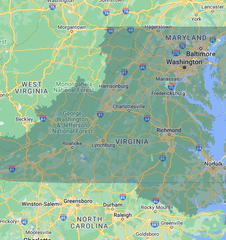
Our Locations
8361 Town Center Ct
Nottingham, MD 21236
311 Central Rd.
Suite 2-02
Fredericksburg, VA 22401
2569 Quality Ct
Virginia Beach, VA 23454
7940 Gainsford Ct.
Bristow, VA 20136
309 Quarles Rd
Ashland, VA 23005
2033 Cook Dr.
Salem, VA 24153
456 Old Courthouse Rd
Appomattox, VA 24522
45 W Boscawen St,
Winchester, VA 22601